


Introduction
The rapid expansion of 5G technology has brought new challenges in thermal management for high-performance networking equipment. One such challenge arose with the air-cooled CPU heat sink of Ericsson‘s cutting-edge 5G router. As the demand for smaller, more efficient devices grows, the need to optimize thermal performance while minimizing size becomes critical.
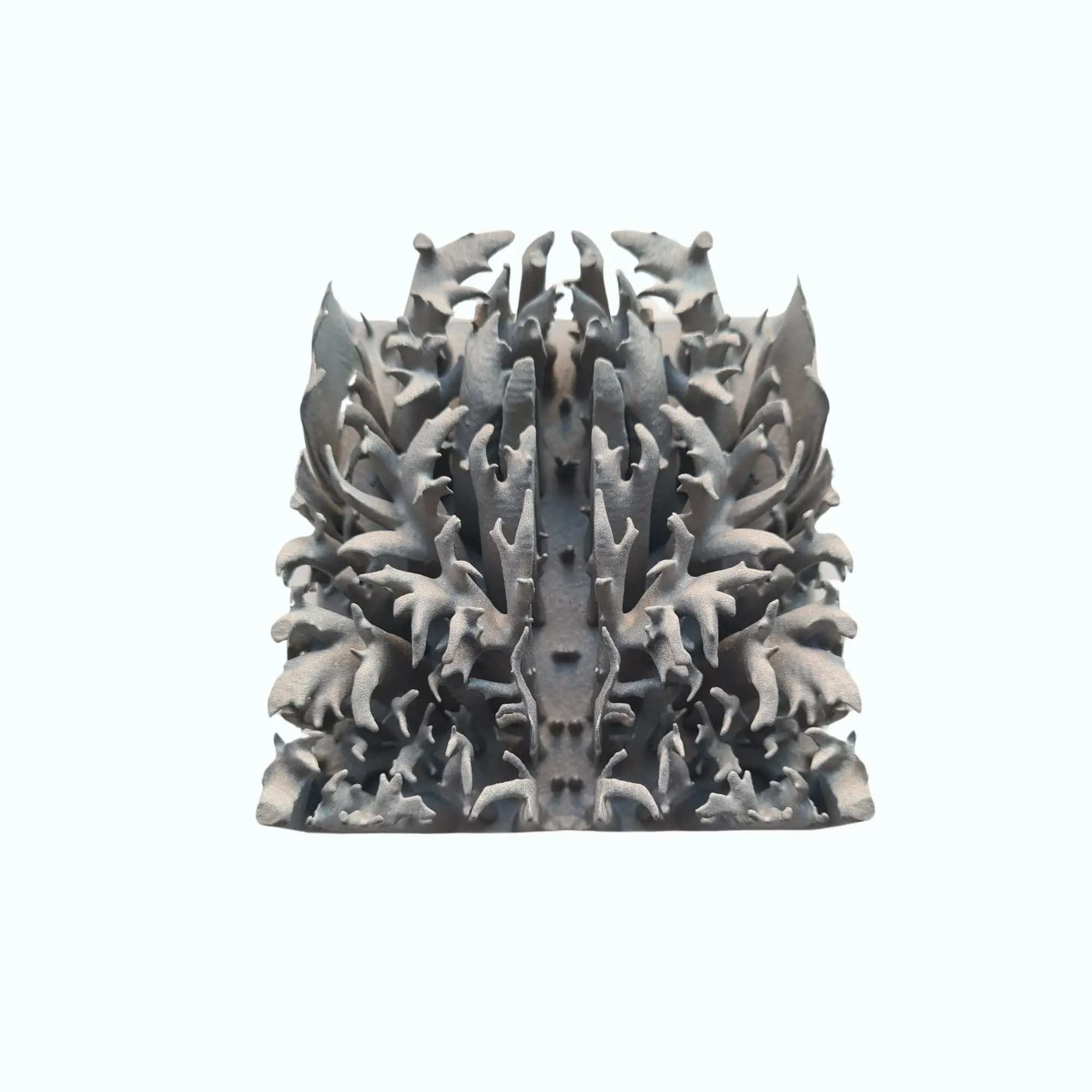
This case study explores the redesign process of an air-cooled CPU heat sink for a 5G router with physics-driven generative design, aiming to achieve lower operating temperatures and a reduced physical footprint. Through a combination of advanced simulation, material selection, and innovative design techniques, the project showcases how engineering ingenuity can address the evolving demands of next-generation technologies.
Objectives & set-up

The primary goal of this heat sink redesign was to enhance thermal efficiency while reducing material usage, aligning with broader sustainability objectives such as lowering CO₂ emissions. To achieve this, the project focused on optimizing heat dissipation and minimizing footprint without compromising performance.
Design settings:
The CPU to be cooled produces 50.4W of power and has a size of 31.5 mm × 42.1 mm. The selected material for the heat sink was aluminium and the cooling airflow provided by the fans was set to 5 m/s.
Key objectives included:
• Improve Thermal Performance: Lower the average CPU operating temperature by enhancing heat dissipation efficiency through advanced generative design and airflow optimization.
• Reduce Heat Sink Footprint: Decrease the heat sink’s base area by 11%, ensuring it effectively cools the CPU while limiting the maximum heat sink height to 28 mm to fit seamlessly within the 5G router’s enclosure.
By meeting these objectives, the project aimed to create a next-generation thermal solution that enhances efficiency, reduces environmental impact, and supports the continued evolution of 5G networking technology.

Results – Lower chip temperature with a smaller footprint
The redesigned air-cooled heat sink successfully met the project’s objectives, delivering improved thermal performance while reducing material usage and footprint size. The optimized design led to a 7.29°C reduction in CPU temperature, enhancing its performance and extending its.
In addition, the heat sink’s footprint was reduced by 11%, to just 68 mm × 78 mm. The component was designed to be manufactured by 3D printing so the design optimization incorporated overhang control, with a maximum allowable overhang of 45 degrees. This refinement minimized the need for extensive support structures, reducing material consumption and post-processing time.
By optimizing the geometry for smoother overhangs, the final design not only improved surface quality but also enabled faster production times and lower overall manufacturing costs. Through the application of physics-driven generative design and advanced manufacturing techniques, this project demonstrated how modern engineering approaches can drive both performance improvements and sustainability benefits in next-generation 5G network technology.

Why ToffeeX?
- Advanced Simulation Capabilities: ToffeeX enables users to customize fluid properties and material characteristics for optimized outcomes tailored to specific applications.
- Powerful Optimization Tools: Tools like Velocity Target allow you to specify relevant objective constraints.
- Manufacturing Flexibility: With options for both additive and conventional manufacturing, ToffeeX supports diverse production requirements, including overhang control to streamline manufacturing.
- User-Friendly Interface: The intuitive design allows for easy integration into existing workflows.
- Accelerate time to market: By meeting critical manufacturing and performance needs, ToffeeX drives efficiency gains and reduces production bottlenecks, accelerating time to market.