

Summary
Fraunhofer IFAM Dresden collaborated with ToffeeX to explore the powerful combination of physics-driven generative design software and additive screen printing technology for electronics cooling applications. This project demonstrates how advanced design tools can unlock new possibilities when paired with innovative, cost-effective manufacturing methods.
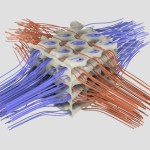
The collaboration focused on designing a series of chip cooling devices optimized for thermal performance while respecting the manufacturing constraints of additive screen printing. The entire process—from setting design goals to producing physical prototypes—was completed in approximately one month, showcasing the rapid development capabilities enabled by this integrated approach.
This project exemplifies a new paradigm in thermal management: combining ToffeeX’s sophisticated optimization algorithms with IFAM’s industrially viable additive manufacturing process creates a pathway for deploying high-performance cooling solutions at scale. The result is not just better-performing components, but components that can be manufactured cost-effectively for real-world applications in electronics and data centers.

Introduction
As computing power continues to increase, so does the heat generated by electronic components. Modern processors, GPUs, and AI chips generate significant thermal loads that must be efficiently managed to maintain performance, reliability, and longevity. This challenge is particularly acute in data centers, where high-density server configurations can generate heat loads exceeding 30 kW per rack.
Traditional cooling solutions, from simple aluminum extrusions to more complex stamped or machined heat sinks, are reaching their performance limits. The industry needs cooling technologies that can deliver superior thermal performance while remaining economically viable for mass production.
This case study presents an innovative approach that combines two cutting-edge technologies: ToffeeX’s physics-driven generative design software and Fraunhofer IFAM’s additive screen printing process.
Together, these technologies enable the rapid design and manufacture of high-performance cooling devices that would be difficult or impossible to produce using conventional methods.
The Application
Heat sinks are critical components in thermal management systems. They work by increasing the surface area available for heat transfer, allowing heat generated by electronic components to dissipate into the surrounding environment or cooling medium.
The project focused on designing water-cooled heat sinks optimized for electronic applications, which were tested using an experimental setup, as shown in Figure [insert number].
This setup was used to evaluate chip cooling performance, with metrics focused on both thermal resistance (how effectively heat is removed) and pressure drop (the pumping power required to circulate the coolant).
The challenge was to design heat sink geometries that maximize heat transfer while minimizing pressure losses, within the manufacturing constraints of additive screen-printing technology.
The Manufacturing Process: Additive Screen Printing
A key differentiator of this project is the manufacturing technology employed: additive screen printing, a process pioneered by Fraunhofer IFAM Dresden.
Additive screen printing is a layer-based manufacturing process that combines traditional screen printing principles with powder metallurgy. The process works as follows:
1. Paste preparation: A metal powder is mixed with an organic binder and a solvent to create a paste with carefully controlled rheological properties
2. Screen printing: The paste is extruded through a patterned screen (similar to traditional screen printing) onto a substrate, creating a single layer
3. Drying: Each printed layer is dried by evaporating the solvent
4. Layer repetition: The process repeats, building up three-dimensional structures layer by layer. Depending on the required structural resolution of the component, the layer thickness ranges between 10 and 200 µm.
5. Sintering: After printing, the “green” part undergoes thermal debinding and sintering to burn out the binder and fuse the metal particles into a solid component

Unlike most additive manufacturing processes optimized for prototyping and small batches, additive screen printing is uniquely suited for mass production:
- High throughput: Capable of producing hundreds of thousands to millions of parts annually
- Fine feature resolution: Achievable details down to 60-100 μm
- Material flexibility: Compatible with various metals, including stainless steel, copper, and titanium
- Cost-effectiveness: Lower investment costs compared to traditional production methods, especially for complex geometries and low-to-mid volume production volumes
- Complex geometries: Enable intricate internal channels and structures, including transverse channels without support structures
- Repeatability: Screens are durable and can withstand up to 100,000 printing cycles
The process is particularly well-suited for small to medium-sized components with complex internal features, exactly the type of geometry required for high-performance heat sinks. With multiple printing tables and optimized workflows, production rates of 350,000+ parts per year are achievable for suitable geometries.
Design Process with ToffeeX
ToffeeX’s physics-driven generative design software played a crucial role in creating optimized heat sink designs that balance performance requirements and manufacturing constraints.
ToffeeX employs computational fluid dynamics (CFD) simulations combined with topology optimization algorithms to generate high-performance designs. The software allows engineers to:
- Define design objectives: In this case, maximizing heat transfer while minimizing pressure drop
- Set manufacturing constraints: Ensuring designs are compatible with additive screen printing capabilities
- Explore the design space: Rapidly generating multiple design variations to evaluate trade-offs

For this project, ToffeeX generated a Pareto front, a set of optimal design solutions representing different trade-offs between heat transfer performance and pressure loss.
This approach gives engineers the flexibility to select the design that best meets their specific requirements, whether prioritizing thermal performance, pumping efficiency, or a balance of both.
One of the key advantages demonstrated in this collaboration was speed. Traditional design approaches would require multiple iterations between CAD modeling, CFD simulation, and design refinement in a process that could take weeks or months.

With ToffeeX, the design exploration phase was completed in hours rather than weeks, generating multiple optimized candidates ready for manufacturing evaluation.
This dramatic reduction in design time is particularly valuable when combined with the rapid prototyping capabilities of additive screen printing.
ToffeeX’s ability to incorporate manufacturing constraints directly into the optimization process was critical for this project. The software ensured that the generated designs:
- Respected minimum wall thickness requirements for screen printing
- Avoided unsupported overhangs beyond the capabilities of the process
This manufacturing-aware approach means designs emerging from ToffeeX are not just theoretically optimal: they’re practically manufacturable.
Results
The collaboration successfully demonstrated the viability of combining advanced generative design with additive screen printing for electronics cooling applications.
From initial goal-setting to physical prototypes in hand, the entire process took approximately one month. This rapid turnaround included:
- Design problem definition and constraint specification
- ToffeeX optimization runs, generating multiple design candidates
- Selection of preferred designs from the Pareto front
- Screen preparation and manufacturing setup
- Additive screen printing of prototype parts
- Post-processing (debinding and sintering)
This timeline represents a significant acceleration compared to traditional development cycles, which typically involve extensive manual design iterations and longer manufacturing lead times.
The additive screen printing process successfully produced the complex internal geometries generated by ToffeeX. The manufactured parts demonstrated:
- Excellent dimensional accuracy, matching the digital designs
- Complex internal channel structures that would be impossible with conventional manufacturing
- Cost-effective production potential for scale-up to higher volumes
The successful manufacture of these intricate designs confirms that additive screen printing is a viable production method for advanced heat sink geometries, not just a prototyping tool.
The Strategic Advantage: Design Meets Manufacturing
This collaboration highlights a critical insight for the future of thermal management: the intersection of advanced design software with innovative manufacturing processes opens entirely new possibilities.
For Electronics Applications
The chip cooling devices developed in this project address real challenges faced by electronics manufacturers:
- Thermal performance: Optimized geometries can provide superior heat dissipation compared to conventional designs
- Compactness: Complex internal structures maximize surface area within constrained volumes
- Manufacturability: Additive screen printing enables cost-effective production at scale
For Data Center Operations
Data centers facing ever-increasing thermal loads can benefit from this approach:
- Higher power densities: More effective cooling enables higher-performance computing in the same footprint
- Energy efficiency: Optimized designs reduce pressure losses, lowering pumping power requirements
- Scalability: Manufacturing process supports deployment across thousands of servers
For the Industry
The broader implications extend beyond any single application:
- Accelerated innovation: Rapid design-to-manufacture cycles enable faster product development
- Design freedom: Generative design explores geometries that human designers might never consider
- Manufacturing flexibility: Additive screen printing bridges the gap between conventional mass production and additive manufacturing
- Cost-effectiveness: Combines high performance with economically viable manufacturing
Conclusion
The collaboration between ToffeeX and Fraunhofer IFAM Dresden demonstrates a new paradigm for developing high-performance thermal management solutions.
By combining ToffeeX’s physics-driven generative design capabilities with IFAM’s innovative additive screen-printing technology, this project enabled rapid development of cost-effective, high-performance chip-cooling devices suitable for electronics and data center applications.
The approximately one-month timeline from concept to prototype showcases the power of integrating advanced design tools with manufacturing-ready additive processes. This approach doesn’t just improve individual components: it transforms the entire development cycle, enabling engineers to explore more design options, optimize for multiple objectives simultaneously, and bring innovative products to market faster.
For engineers and businesses seeking cooling solutions, this project illustrates that you no longer need to choose between performance, cost, and speed. Physics-driven generative design tools like ToffeeX, combined with innovative manufacturing processes such as additive screen printing, enable all three.
As electronic devices continue to push the boundaries of power density and performance, the thermal management solutions that keep them running reliably must evolve as well. The intersection of advanced design software with additive manufacturing represents a clear path forward—one that delivers superior performance while maintaining the cost-effectiveness required for real-world deployment.
About Fraunhofer IFAM Dresden
The Fraunhofer Institute for Manufacturing Technology and Advanced Materials IFAM, Dresden Branch, is a globally recognized research facility specializing in powder metallurgy and advanced manufacturing processes. The institute has pioneered additive screen printing technology and is the global market leader in its development.
Fraunhofer IFAM Dresden’s expertise spans the entire process chain of powder-based manufacturing, from material development and paste formulation through printing processes to debinding and sintering. The institute works with a wide range of materials, including metals (steels, copper, copper diamond, titanium, refractory metals), ceramics, and multi-material systems.
With advanced facilities including state-of-the-art screen printing equipment capable of handling 200 x 300 mm printing areas and sophisticated material characterization laboratories, Fraunhofer IFAM Dresden supports both research projects and industrial implementation. The institute’s unique combination of materials expertise and manufacturing capabilities makes it an ideal partner for developing next-generation manufacturing solutions that bridge the gap between prototyping and mass production.